


Last Updated: October 25, 2026
Quick Summary
What to wear to an indian wedding depends on the event: plan one outfit per function, since mehndi is casual and daytime, sangeet is a dance party, the ceremony is formal and daytime, and the reception is formal and evening. Avoid red and white, and ask the couple about any palette.
- A single Indian wedding can span three to five events across several days.
- Red is traditionally reserved for the bride, and white is associated with mourning.
- Skip black for daytime ceremonies, though it is acceptable at evening receptions.
- A kurta pajama is the most versatile option for male guests across several events.
- Order outfits three to four weeks before the event to allow time for alterations.
Table of Contents
- The Indian Wedding Dress Code for Guests
- What Colors Not to Wear to an Indian Wedding
- Traditional Outfits for Women: Sarees, Lehengas, and Suits
- What to Wear to an Indian Wedding as a Male Guest
- What to Wear to an Indian Wedding as a Non-Indian Guest
- Outfit Guidance by Ceremony: Mehndi, Sangeet, and Reception
- Practical Wearability, Sizing, and Budget Planning
- Regional, Religious, and Family-Specific Customs
- Choosing Your Guest Outfit from Absolutely Desi
- Frequently Asked Questions
The Indian Wedding Dress Code for Guests
According to guidance on guest etiquette and attire from The Knot, wedding guests increasingly check dress codes before travelling, and Indian weddings reward that habit more than most. Deciding what to wear to an Indian wedding starts with one rule: dress for the ceremony, not just the wedding. Indian weddings are multi-event affairs, and each function carries its own dress code, color conventions, and practical demands.
Why Event Type Changes Everything
A single Indian wedding can span three to five events across several days. The mehndi is casual and daytime, often outdoors. The sangeet is a party built around dancing. The wedding ceremony itself is formal and traditionally daytime. The reception is formal and evening. For a formal, evening-appropriate option, shop a black thread work georgette reception lehenga choli. Treat each as a separate outfit decision, because the fabric weight, embroidery density, and footwear that suit a sangeet will feel wrong at a morning ceremony. Guests who plan one outfit per event, rather than one outfit for the whole wedding, stay comfortable and appropriately dressed throughout.
What Colors Not to Wear to an Indian Wedding
Red and white are the two colors to avoid as a guest, but the reasons are more specific than most guides admit. Red is traditionally reserved for the bride in many North Indian Hindu ceremonies, where the bridal lehenga or saree is often red, maroon, or deep crimson. White is associated with mourning and widowhood in Hindu custom, so a white outfit can read as inappropriate even when it is stylish. Beyond those two, the guidance is practical: skip black for daytime ceremonies, where it looks heavy, though it is acceptable at evening receptions. Bright, festive colors, jewel tones, pastels, and rich embroidery are all welcome.
The nuance competitors miss is that color rules are not universal. In many South Indian ceremonies, the bride may wear a red or maroon silk saree, but guests commonly wear deep greens, golds, and temple-toned silks without issue. At some Muslim weddings, green and gold are favored, and modest coverage matters more than avoiding a specific color. Sikh weddings often involve head covering at the gurdwara, and bright colors are welcome. Some families request a coordinated palette for specific events, such as pastels for the mehndi or jewel tones for the reception. The only reliable rule is to ask the couple or a close family member what they expect, and follow their guidance over any general rule, including ours.
When in doubt, choose a color that photographs well against the couple's outfits and the venue decor. A jewel-toned green, a rich blue, or a festive pink is almost always safe. Avoid all-white and all-red unless the couple has explicitly said otherwise.
Traditional Outfits for Women: Sarees, Lehengas, and Suits
For women, the three main options are the saree, the lehenga, and the salwar or Anarkali suit. Each suits different events and different comfort levels.
Sarees and Ready-to-Wear Options
A saree is a length of unstitched fabric draped around the body over a blouse, and it remains the most versatile guest outfit in many regions. The catch is draping skill. If you have never worn one, a ready-to-wear saree removes that barrier: it is pre-pleated and stitched so you step into it rather than drape it. For guests who want a saree without the learning curve, a ready-to-wear saree is the practical route, and it travels well for destination weddings.
Lehengas, Anarkalis, and Sharara Sets
A lehenga is a full, embroidered skirt worn with a fitted blouse and dupatta, and it is the go-to for sangeet and reception events. An Anarkali suit is a long, flared kurta over churidar or trousers, easier to move in and a strong choice for daytime ceremonies. Sharara sets pair wide-legged trousers with a long top, popular for mehndi and festive events.
What to Wear to an Indian Wedding as a Male Guest
Male guests have a simpler decision tree: kurta, sherwani, or Indo-Western. A kurta pajama is the most versatile option and works for mehndi, sangeet, and daytime ceremonies. A sherwani is a formal, structured coat-like garment for the wedding and reception. An Indo-Western outfit, such as a kurta with tailored trousers or a Nehru jacket over a shirt, suits guests who want a middle ground. Fabric and fit matter more than embellishment: a well-fitted silk-blend kurta in navy or powder blue reads as formal without being fussy, and it stays comfortable through a long ceremony.
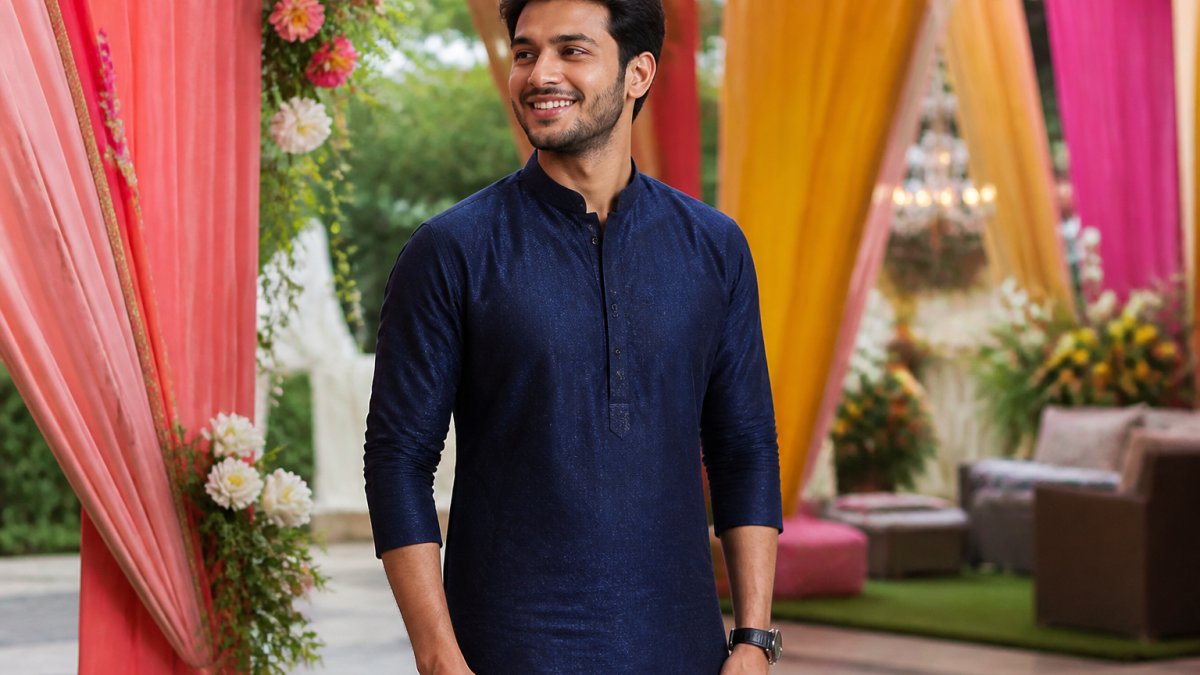
For a first sherwani, a black embroidered mandarin collar sherwani set with dupatta covers wedding, reception, and sangeet in one purchase. If you prefer a lighter option, a navy blue silk blend wedding kurta or a powder blue georgette wedding kurta styled with matching pyjama or churidar is a safe, polished choice.

What to Wear to an Indian Wedding as a Non-Indian Guest
Non-Indian guests should wear Indian attire where the couple expects it, and it is nearly always welcomed. The respectful approach is to choose a modest, well-covered outfit in festive colors, avoid red and white, and skip anything that mimics bridal wear. If you are unsure, ask the couple directly; most are delighted to advise. A lehenga choli or a kurta set is appropriate for first-timers, and both are easy to find in ready-to-wear sizing. Avoid cultural costume elements such as bindis worn as accessories or heavy bridal jewelry. The goal is to dress as a guest, not to dress as the couple.
Outfit Guidance by Ceremony: Mehndi, Sangeet, and Reception
The mehndi calls for light, breathable fabric in bright colors, and comfortable footwear because it is often outdoors and floor-seated. The sangeet rewards movement: choose a lehenga or sharara you can dance in, and test it before the event. The wedding ceremony is formal and traditionally daytime, so lighter colors and refined embroidery work well. One outfit per event is the rule, not one outfit for all.
Black Embroidered Mandarin Collar Sherwani Set With Dupatta →
Ceremony |
Time of Day |
Formality |
Best Fabric |
Watch Out For |
|---|---|---|---|---|
Mehndi |
Daytime |
Casual |
Cotton, georgette |
Floor seating, outdoor heat |
Sangeet |
Evening |
Party |
Georgette, net |
Dancing, long hems |
Wedding |
Daytime |
Formal |
Silk, Chinon |
Long ceremony, heavy embroidery |
Reception |
Evening |
Formal |
Silk, net |
Venue dress code |
Practical Wearability, Sizing, and Budget Planning
Comfort decides whether a guest outfit works. Heavy embroidery looks spectacular in photographs and becomes unbearable by hour three. Choose breathable fabrics for daytime events and reserve the heaviest pieces for short evening functions. On sizing, order early and check the size chart against your measurements rather than your usual label, because Indian sizing runs differently from UK, US, and Canadian sizing. Budget planning matters too: renting or borrowing is a legitimate option for one-off events, and buying one versatile outfit you can restyle across two events often costs less than three separate purchases. Build in time for alterations; a rushed hem is a common last-minute problem.
The gap most guides miss is the practical logistics of actually wearing the outfit through a full event. Footwear is the first decision: heels sink into lawns at outdoor mehndis, so block heels, wedges, or embellished flats are safer than stilettos. For long ceremonies, choose shoes you can stand in for an hour or more. Draping help matters for sarees: if you are wearing a saree, ask a family member or a professional draper to help you pin it, and carry safety pins. Ready-to-wear sarees remove the draping barrier entirely. For lehengas, test the hem length before the event: a skirt that drags will trip you on stairs and dance floors. Weather is a real factor: outdoor daytime events call for light cotton or georgette, while evening receptions may need a shawl or jacket for air-conditioned venues.
Inclusive sizing and accessible options deserve explicit mention. Many Indian wear brands now offer sizes beyond the traditional small-to-large range, and ready-to-wear sarees and pre-stitched lehengas are easier for guests with mobility needs or pregnancy. If you are pregnant, choose an empire-waist Anarkali or a relaxed kurta set with an elastic waistband. If you have limited mobility, a pre-draped saree or a sharara set with a comfortable waistband is easier to manage than a heavily pinned saree. For guests who need easy-to-wear alternatives, a kurta set with trousers or a ready-to-wear lehenga with a zip closure is a practical choice.
Budget planning should include alterations, footwear, and accessories, not just the outfit. Renting is a sensible option for a single event, and borrowing from a friend or family member is common. If you are buying, choose one versatile outfit you can restyle across two events, such as a lehenga with a removable dupatta or a kurta set that works for both the mehndi and the sangeet. That approach often costs less than three separate purchases and reduces the risk of buying something you will never wear again.
Regional, Religious, and Family-Specific Customs
Customs vary widely by region, religion, and family. In many South Indian ceremonies, guests wear silk sarees and traditional jewelry, and the color conventions differ from North Indian weddings. Muslim ceremonies may call for more modest coverage. Sikh weddings often involve head covering at the gurdwara. Some families request specific colors or coordinated palettes for particular events. None of this is guesswork you should do alone: ask the couple or a close family member what they expect, and follow their guidance over any general rule. The family's preference always outranks the internet's advice, including ours.
Choosing Your Guest Outfit from Absolutely Desi
The most reliable way to get guest attire right is to buy from a specialist who understands the events. Absolutely Desi stocks Indian ethnic and designer wedding wear for both men and women, from sarees and lehengas to kurta sets and sherwanis, with worldwide shipping to the UK, US, Canada, India, and UAE.
Frequently Asked Questions
What is the dress code for guests at an Indian wedding?
Most Indian weddings invite guests to wear traditional Indian attire or formal festive clothing. Women typically wear sarees, lehengas, or salwar suits, while men wear kurtas, sherwanis, or bandhgalas. The specific dress code often depends on the ceremony: mehndi and sangeet events lean more casual and colorful, while the main wedding and reception call for more formal pieces. Always check the invitation or ask the couple directly, since family preferences vary widely.
Is there a color you shouldn't wear to an Indian wedding?
Avoid white and black for the main ceremony. White is traditionally worn at funerals and is reserved for the bride in some regions, while black is considered inauspicious for celebrations. Red is also risky because it is the traditional bridal color in many communities. Bright jewel tones, pastels, and vibrant colors are safer and more celebratory choices for guest attire.
Can non-Indian guests wear traditional Indian clothing to a wedding?
Yes, and it is often appreciated. Wearing a saree, lehenga, or kurta shows respect for the culture and helps you blend in with the celebration. The key is to choose something modest and appropriate for the event, avoid bridal colors, and make sure the outfit fits comfortably. If you are unsure, a fusion outfit like an Indo-Western dress or a kurta with tailored trousers works well.
What should men wear to an Indian wedding?
For the main ceremony, a sherwani or a well-fitted kurta with churidar or tailored trousers is ideal. A Nehru jacket over a kurta adds formality for the reception. Lighter kurtas in georgette or silk blend fabrics work well for mehndi and sangeet events. Stick to jewel tones, pastels, or earthy colors, and avoid white and black. Comfortable mojari or loafers complete the look.
What should I wear to the different events at an Indian wedding?
Mehndi is usually casual and colorful, so a light kurta or cotton saree works well. Sangeet is festive and dance-heavy, so choose something you can move in, like a sharara set or a lightweight lehenga. The main wedding ceremony calls for your most formal outfit, such as a silk saree or sherwani. The reception is often the most glamorous, so a party wear saree or embroidered lehenga is appropriate.
What should I avoid wearing to an Indian wedding?
Avoid white and black outfits for the main ceremony, as they carry funeral associations. Skip red if the bride is wearing traditional red, since it can look like you are competing with her. Very revealing clothing is generally not appropriate for religious ceremonies. Also avoid heavy Western formal wear like tuxedos unless the invitation specifically requests it, as it can feel out of place at a traditional Indian wedding.
Getting the dress code right for every event on the schedule is the part guests underestimate most. Absolutely Desi makes it simpler with premium Indian ethnic and designer wedding wear for men and women, worldwide shipping to the UK, US, Canada, India, and UAE, and a collection that covers sarees, lehengas, kurta sets, and sherwanis in one place. Get started with Absolutely Desi and find the right outfit for each ceremony on your invitation.
